
When work is optional, ambition doesn’t disappear
My hypothesis about AI, basic income and a future where some people keep competing while others choose a quieter life. Freedom and being left behind are different outcomes.
A shared foundation, with room for different lives.AI-generated conceptual setting.
I don’t think everyone wants to spend their life competing. I also don’t think removing the need to work would remove the desire to achieve something.
Imagine AI making production easier and a basic income providing more security. Some people keep building and competing; others live more quietly; some move between those modes.
This is a conditional scenario, not a prediction that basic income is inevitable or that we know how to fund it. My claim is that less compulsory work would change the reasons to compete, not eliminate them.
Having enough and wanting more are different motives
If the rent is covered, a project can still be about curiosity, mastery, service, influence, ownership or making something exist.
-
01
Less pressure can open different lives.
Curiosity, mastery, service and ambition can continue. So can the wish to care, make music or rest.
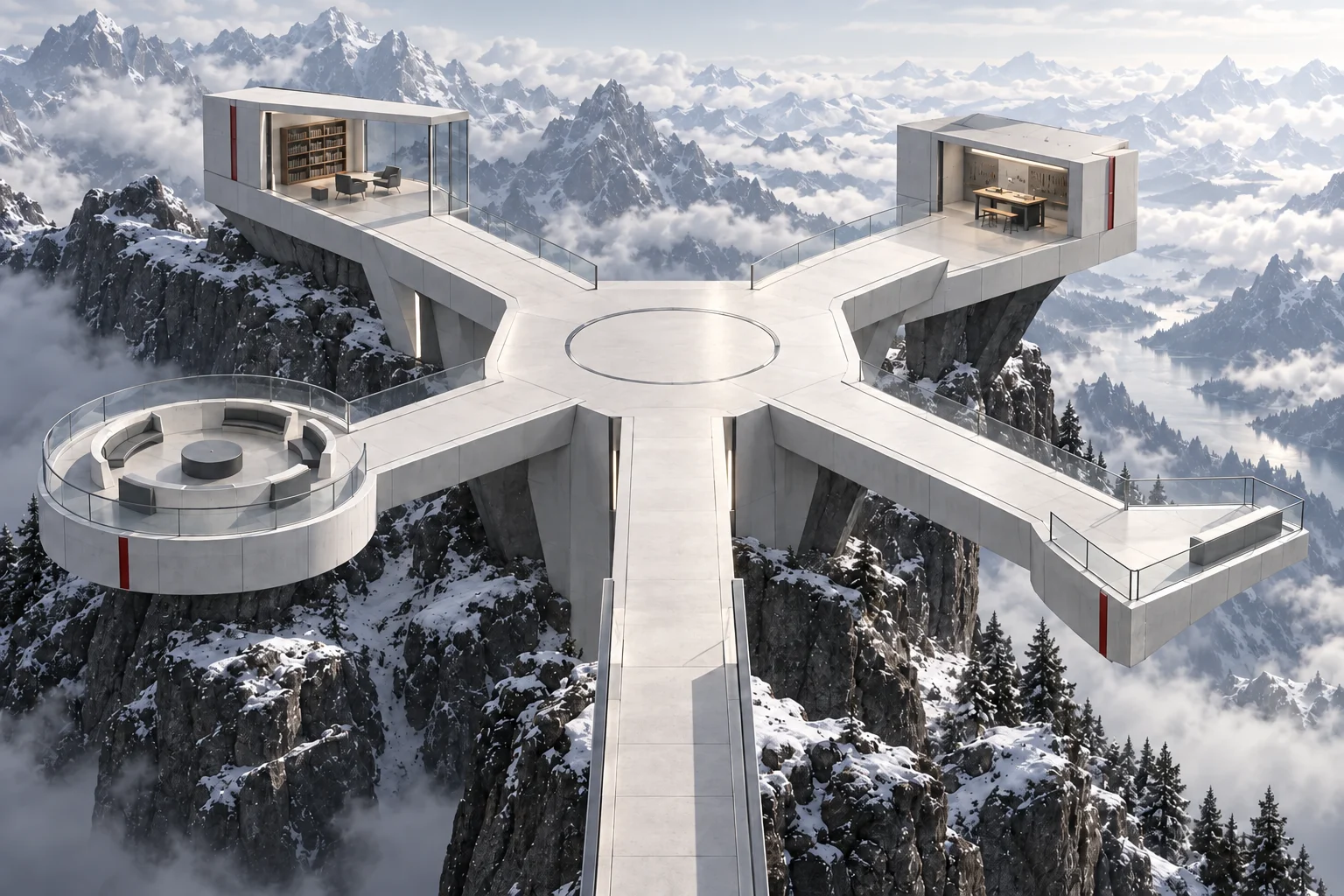
 1BuildA workshop to make things2CareA table to share time3ExploreA room to read and learn4RestA lookout with no taskOne foundation supports different choices. People can change direction. AI-generated conditional scenario.
 -
02
Security can coexist with exclusion.
A society might provide enough to consume while concentrating the ability to own, build and influence.
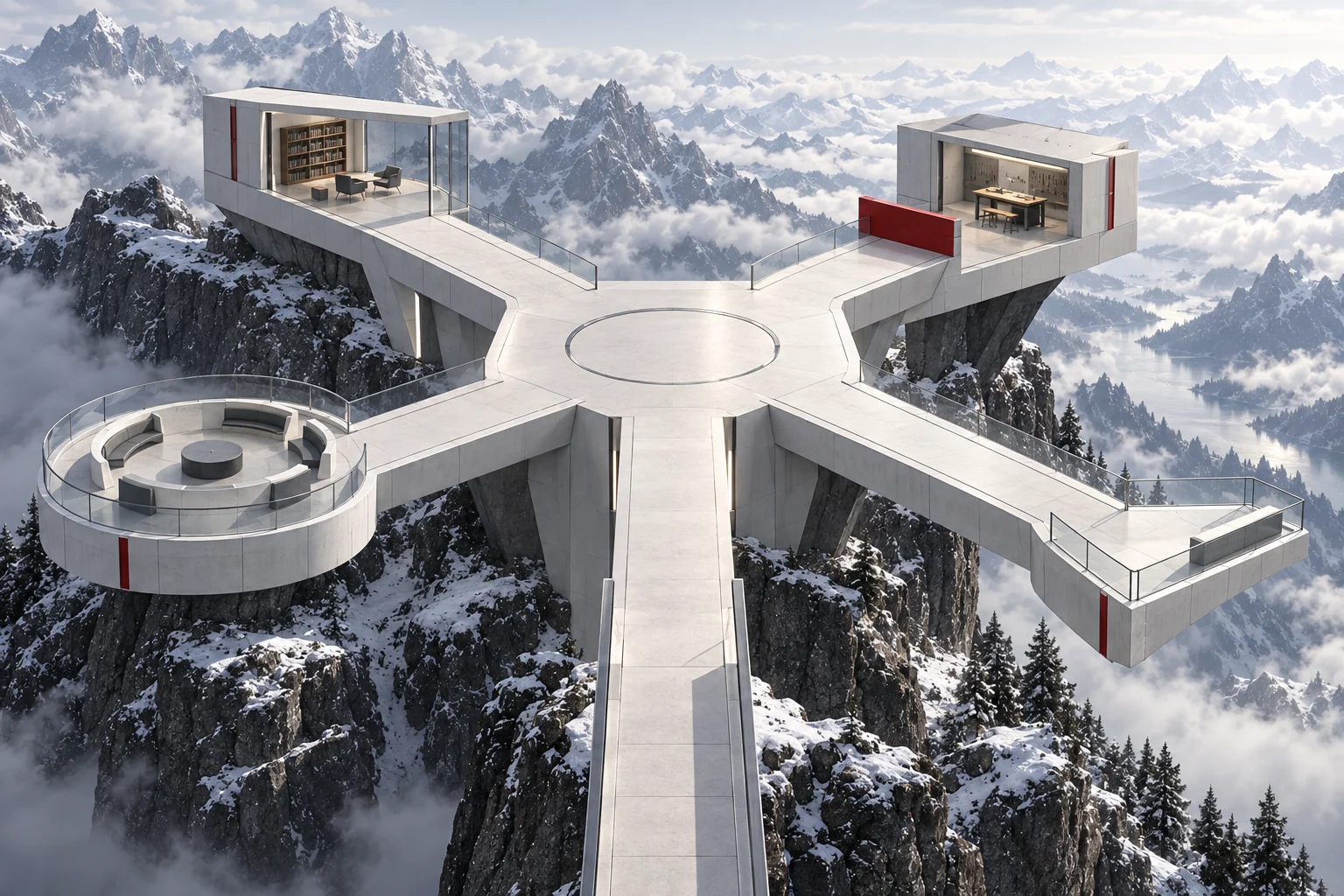
1BuildWorkshop access restricted2CareA table to share time3ExploreA room to read and learn4RestA lookout with no taskThe foundation stays. Access to the workshop changes. AI-generated conditional scenario.
A conditional future, not a prediction that basic income will arrive. These paths do not divide people into permanent classes.
Personal AI symbiosis could help someone explore an idea without first assembling a large organisation. The same tools could help someone finish necessary work and spend more time with family.
Care, study and making music can involve great commitment without commercial competition. People also change what they want. What matters is whether the activity is chosen and which opportunities remain available.
Freedom to stop is different from being left behind
Someone who can participate and chooses leisure is in a different position from someone who wants to participate but cannot gain access.
Hold material security constant in this hypothetical future. Then ask two different questions.
| The person's preference | A real way to participate | The way in is blocked |
|---|---|---|
| Wants to build or contribute | OpportunityThey can attempt the work, without a guarantee of success. | ExclusionWanting to take part does not create access. |
| Wants a quieter life now | ChoiceThey can step back and still have a route back in. | Choice remains constrainedThe blocked route matters if their preference changes. |
Keep the door open. A change in ambition should not require permission to become a different kind of person.
A conceptual distinction, not a classification of people or a prediction of how common each situation will be. The income floor is an assumption here, not an inevitable consequence of AI.
Tools, education, capital, health, time, relationships and institutions all affect access. Cheap intelligence alone does not supply them. I don’t want a neat story about winners and people who supposedly didn’t try.
My scarcity argument matters here: cheaper production can leave ownership, trust, access and the power to choose what gets produced contested.
What existing cash experiments can tell us
Cash-transfer studies do not simulate a mature AI economy where paid work is broadly optional.
OpenResearch’s study found modest reductions in employment and hours overall, with substantial variation. Its employment findings describe time going towards family, care and leisure.
That challenges the idea that everyone responds alike. It does not establish what permanent universal basic income would do alongside an AI-driven change in production. Funding, housing, scarce services and political choices remain unresolved.
The competition I expect to remain
People who want to build and compete may keep pursuing different prizes at a scale that once required many more people.
A strong human–AI system could make a person unusually capable. It could also intensify competition for what remains scarce. Adopting the tools does not guarantee winning.
The promise is room for both ambition and a quieter life. If someone steps back and later wants to build, the way back should remain open.
Sources and further discussion
- A discussion of basic income and fulfilment on r/BasicIncome. Participants disagree over how much work supplies purpose and routine; some would prefer to work less or choose work more freely. This is a useful record of competing views, not a representative survey or evidence of how most people would respond to an income floor.
Related Posts
A new kind of company just became possible
AI made implementation cheap before companies learned how to use it. For a brief window, a small technical team can sell the finished work. The hard part is proving the accepted result.
The check you didn’t know to ask for
Your agent can pass every test you wrote. Who notices the test you forgot? A working local example of keeping the check; discovery and human benefit are unmeasured.
The reel sold dinner. Your AI built homework.
Before you hand an idea to your agent, find the work its users won’t do. A social-media reply becomes a smaller product test.