
The problem
Building a custom Discord bot involves programming, infrastructure setup and configuration. VibeCord explored a shorter path: describe the bot in plain English, inspect the generated code, then deploy it.
The harder problem underneath that: shipping a system like this at all. AI-generated code at runtime, cloud deployment on demand, multi-tenant isolation, and a real-time feedback loop all have to hold up when users start depending on them. The visible product was simple. The infrastructure underneath it was not.
The flow it was built around
1 — Describe it
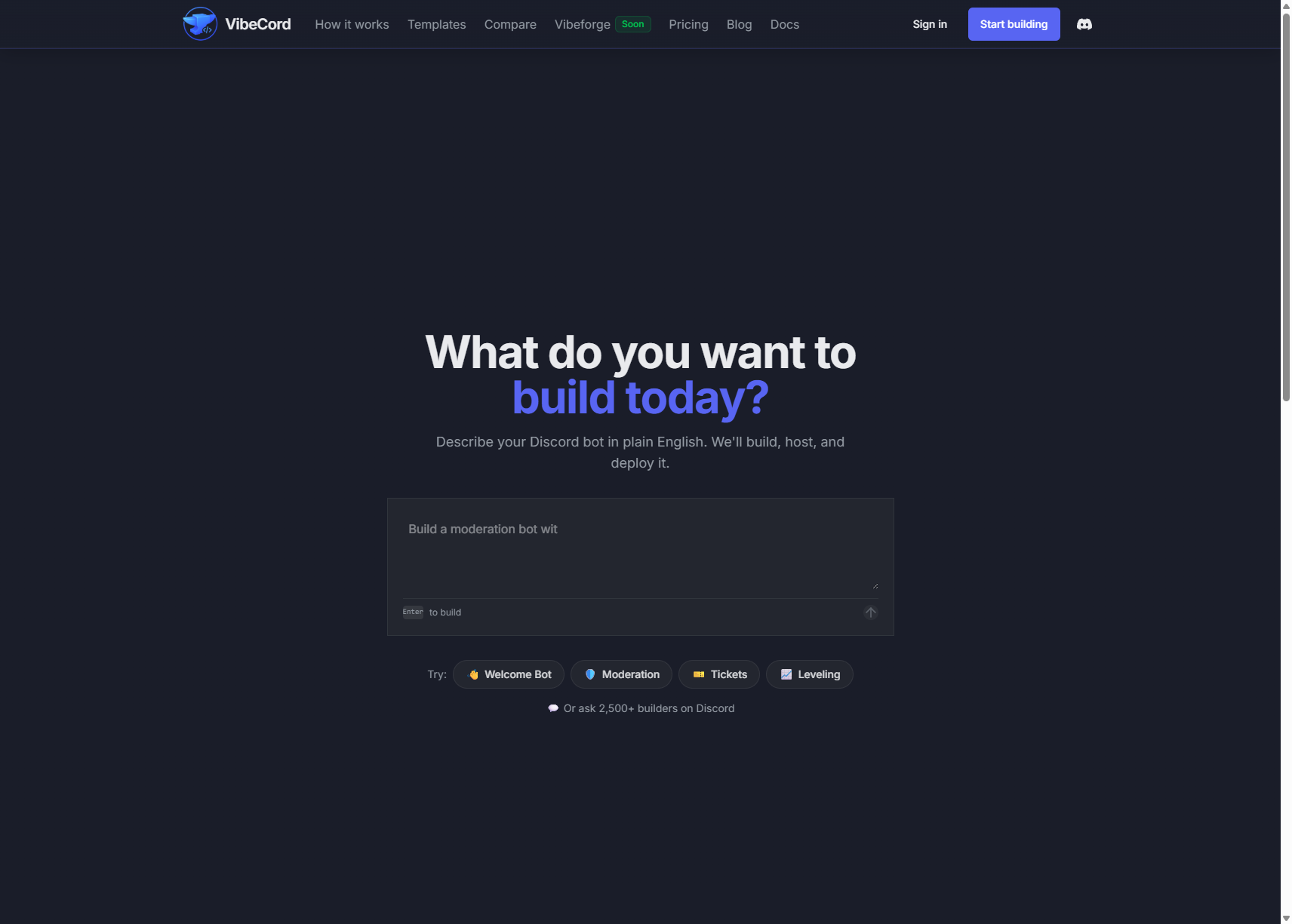 Users type what they want: “A welcome bot that greets new members.” No configuration. No code.
2 — Agent generates it
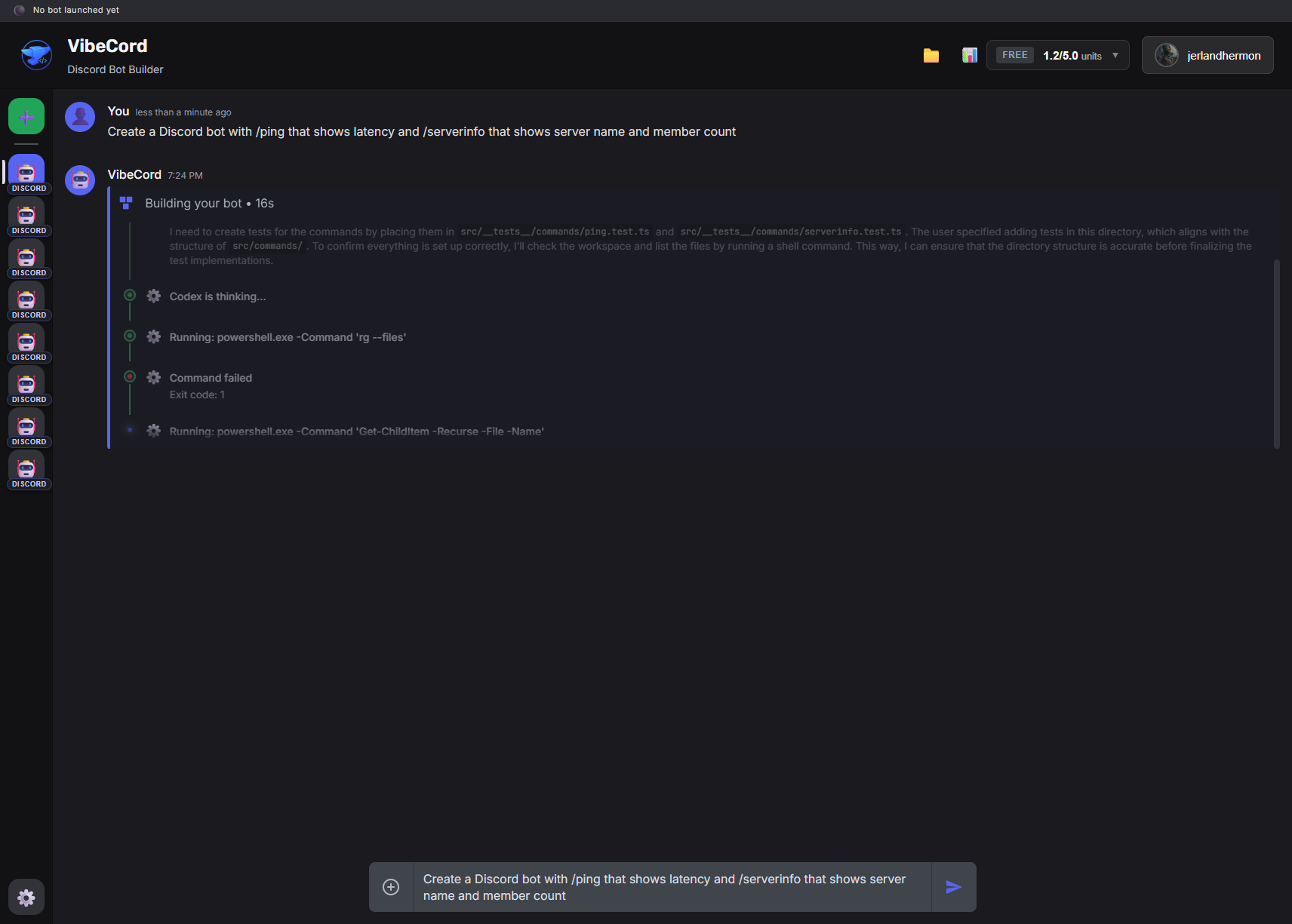 OpenAI Codex generates the full bot codebase in real-time — entry point, event handlers, commands, services, and tests. The user sees it happen.
3 — Review and deploy
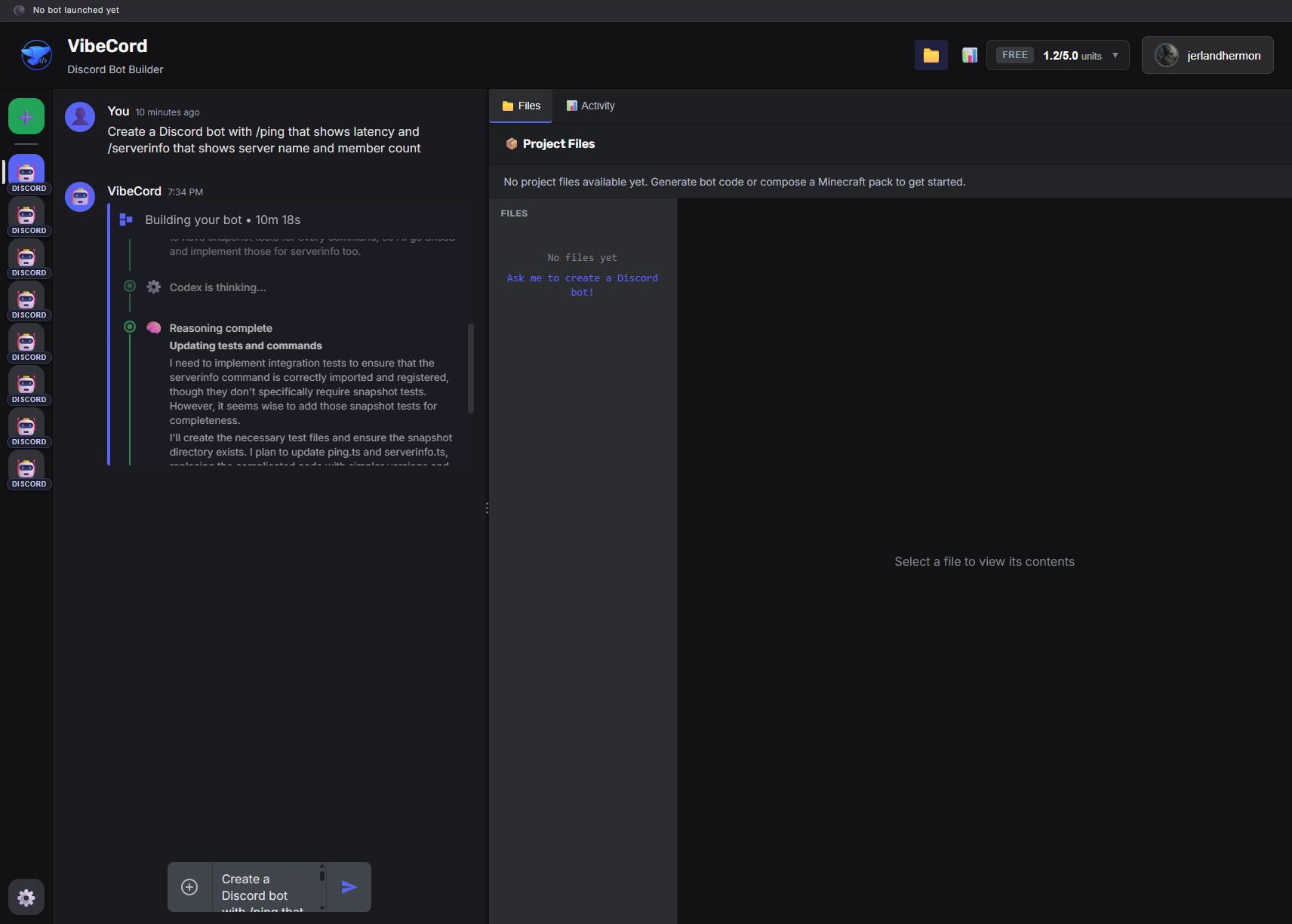 Full file browser with syntax highlighting. Users can inspect every generated file before deploying.
4 — Running
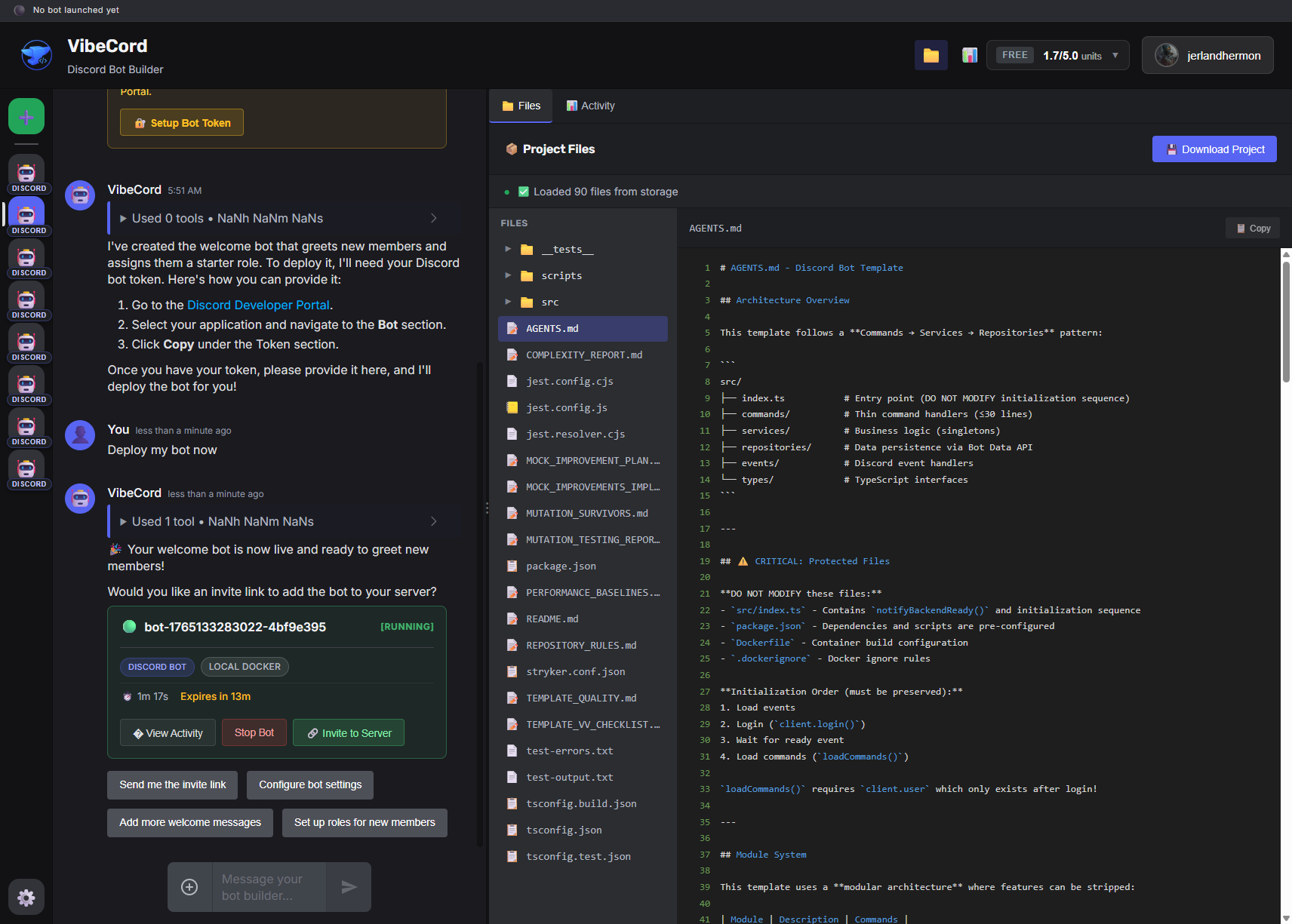 A captured running-state screen from the project. This screenshot documents the workflow, not current service availability or a delivery-time promise.
What this case study shows
The screenshots and architecture describe a project implementation: prompt, clarification, planning, preview, confirmation, generation, token setup, deployment and running state. They do not establish current availability, customer outcomes or a service-level guarantee.
Architecture
The system is a TypeScript monorepo with clear domain separation:
Chat UI → Express backend (Agents + Codex) → Code artifact (S3) → AWS Fargate → Live bot
Four domain contexts with anti-corruption layers separating them: Discord Bot Builder, Platform/Infrastructure, Evaluation, and Minecraft/Luanti (feature-flagged). Each context owns its own models and terminology. A monolith backend keeps deployment simple while heavy work (bot execution) runs in isolated per-user containers.
Infrastructure provisioned via Terraform: RDS PostgreSQL, DynamoDB for high-volume ephemeral data, ECS Fargate cluster, ALB, CloudFront, S3 artifacts, AWS Secrets Manager. CI/CD via GitHub Actions with staged gates — unit tests on every push, OpenAI Evals gated to main only (cost control), post-deploy smoke test with auto-rollback in under 2 minutes.
What broke and what I learned
The system shipped too fast before the governance layer caught up. Three things that went wrong:
1. Coupled domain boundaries. New features crossed contexts and made changes harder to isolate. The refactoring work introduced anti-corruption layers and clearer domain separation.
2. No audit trail for AI actions. Users couldn’t understand why the bot did what it did. When something went wrong, there was no log of what the agent decided. Fix: added structured logging to every agent step, streamed live via SSE to the UI. The Unified Timeline shows every phase, decision, and error in real-time.
3. Deploy complexity outpaced governance. The CI/CD pipeline was too fragile when multiple workflows ran in parallel. One failing test could silently skip others. Fix: consolidated to a single ordered pipeline, introduced path filtering to skip irrelevant test suites, made rollback automatic.
The underlying lesson: The limiting factor is never the AI. It is the surrounding system’s ability to make AI actions explainable, recoverable, and operationally sane.
This is why Portarium exists. The patterns I learned fixing VibeCord — validation at every boundary, approvals before irreversible actions, full audit trails — became the architecture direction behind the later consulting work.